
Farming & Health Education: How Nurture+ Kakuma Supports Refugee Parents from Pregnancy to Their Child’s First Year
The first year of a child's life is a period of extraordinary growth. It is also a period when parents and caregivers need knowledge, support, nutritious food, healthcare, emotional wellbeing, and the confidence to respond to the changing needs of a young child.
For refugee families living in Kakuma and Kalobeyei, creating these conditions can be challenging. Displacement, food insecurity, limited livelihood opportunities, environmental pressures, and uncertainty can affect how families experience pregnancy and early parenthood.
This is where Farming & Health Education (FHE) is taking an integrated approach.
Through Nurture+ Kakuma, FHE connects maternal and child wellbeing with mental health support, nutrition education, climate-smart agriculture, and livelihood development. Rather than treating these issues separately, the programme recognizes that the wellbeing of a child is closely connected to the wellbeing and resilience of the family caring for that child.
The result is a community-led approach built around one powerful idea:
Thriving Mothers, Thriving Futures.
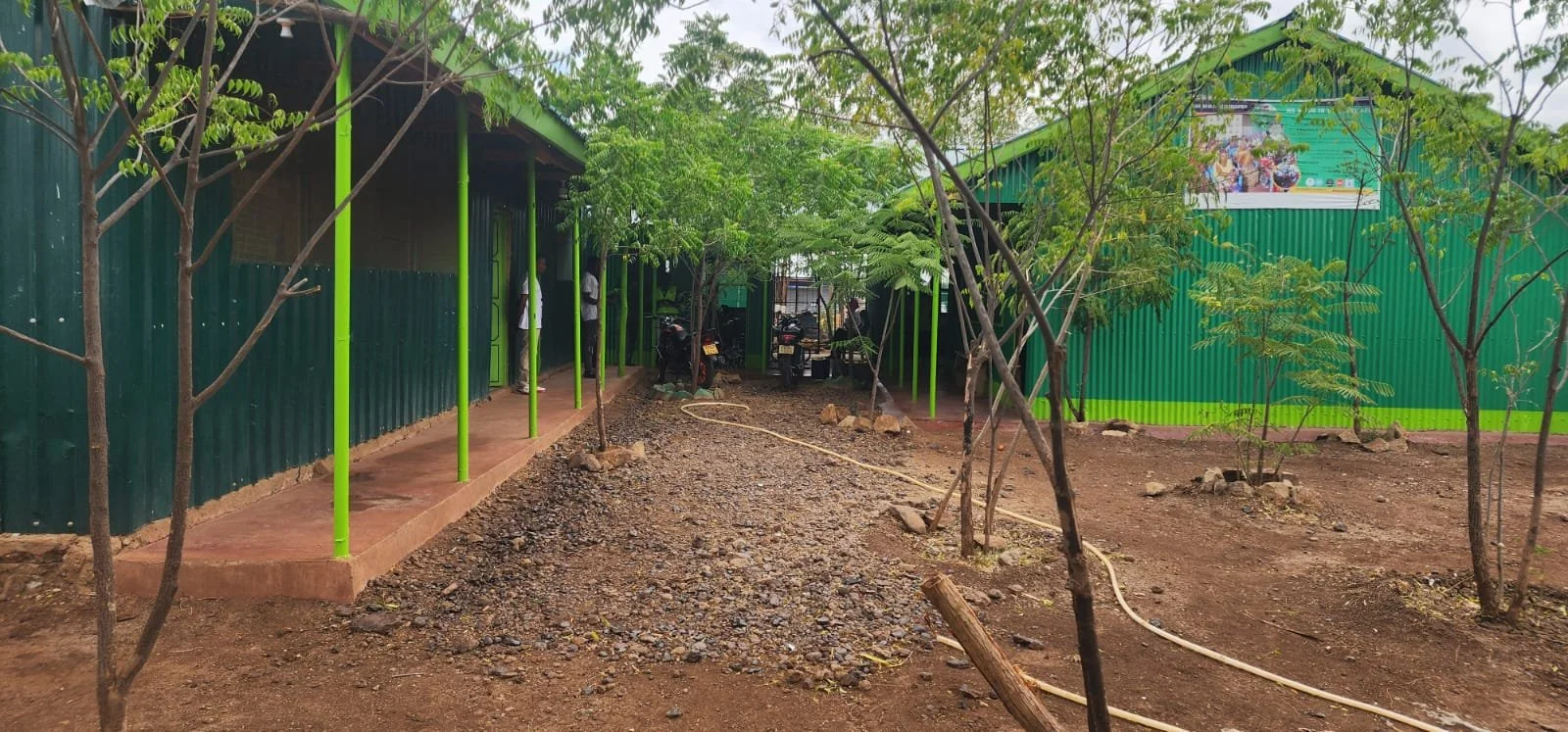
FHE Centre
What Is Nurture+ Kakuma?
Nurture+ Kakuma is an integrated maternal and family wellbeing programme developed by Farming & Health Education to support refugee parents and caregivers from pregnancy through the child's critical first year.
The programme brings together several areas of support, including:
Pregnancy-to-postnatal health support
Maternal and child nutrition
Mental and emotional wellbeing
Parenting and caregiver support
Climate-smart agriculture
Kitchen gardening
Livelihood development
Community-based learning
Household resilience
The approach recognizes that families rarely experience these challenges separately.
A mother who is worried about food insecurity may also be worried about her child's nutrition. A caregiver facing financial pressure may also experience stress. A family living in an environmentally challenging setting may need both health information and practical ways to improve access to nutritious foods.
Nurture+ Kakuma therefore seeks to connect these areas around the needs of the family.
Farming & Health Education is a refugee-led and community-based organization working in Kakuma and surrounding communities. Its wider mission focuses on ecological job training, regenerative agriculture, preventive health education, and community empowerment.
Nurture+ Kakuma builds on this experience by placing parents and young children at the centre of an integrated support system.
The programme was also selected as one of the finalists of the Good Start Challenge, which focuses on innovative solutions designed to improve the wellbeing of parents and caregivers of young children in disadvantaged settings.
This recognition highlights the importance of looking beyond the child alone and considering the conditions in which parents and caregivers are raising their children.
Why Maternal and Child Wellbeing Matters in Kakuma
Kakuma Refugee Camp and the Kalobeyei Integrated Settlement are located in Turkana County, a region characterized by an arid climate and significant environmental and socioeconomic challenges.
For refugee families, these challenges can influence nearly every aspect of daily life.
Food availability, household income, access to services, water, health, housing, education, and livelihood opportunities are interconnected.
Maternal and child wellbeing must therefore be understood within this wider context.
Pregnancy is already a period when women need appropriate healthcare, nutritious food, emotional support, and reliable information. After childbirth, these needs continue while parents take on the additional responsibility of caring for a newborn.
The wellbeing of the mother and the wellbeing of the child are closely connected.
A supported mother is better positioned to care for her child.
A household with access to nutritious food has stronger foundations for healthy development.
A caregiver who feels emotionally supported may have greater confidence in responding to the needs of a young child.
A household with livelihood opportunities may have greater capacity to manage economic challenges.
This is why integrated family support matters in Kakuma.
Nurture+ Kakuma does not view maternal health as an isolated medical issue. It looks at maternal and child wellbeing through the wider lens of nutrition, mental health, caregiving, food security, livelihoods, and community resilience.
The Challenges Facing Refugee Parents During Pregnancy and Early Childhood
Refugee parents can face a combination of challenges that make pregnancy and early childhood especially demanding.
Food insecurity
Access to adequate and nutritious food remains an important concern for vulnerable refugee households.
When food is limited, families may struggle to consistently provide diverse and nutritious meals.
For pregnant women and young children, nutrition is particularly important because their bodies have increased nutritional needs during pregnancy, infancy, and early childhood.
Limited livelihood opportunities
Economic opportunities can be difficult to access in displacement settings.
Parents may have limited income-generating options while also carrying significant caregiving responsibilities.
This can create pressure on household resources.
Climate and environmental challenges
Kakuma's arid environment presents challenges for conventional food production.
Water scarcity, high temperatures, drought, and unpredictable environmental conditions can make agriculture difficult.
Families therefore need practical approaches that are adapted to local conditions.
Emotional pressure
Pregnancy and early parenthood can bring emotional challenges even in stable circumstances.
For displaced families, these experiences may occur alongside uncertainty, financial pressure, separation from relatives, and the broader effects of displacement.
This makes mental and emotional wellbeing an important part of family support.
Limited access to practical knowledge
Health information is valuable, but families also need opportunities to apply what they learn.
Parents may benefit from practical training in nutrition, food production, financial literacy, parenting, hygiene, and household resilience.
Nurture+ Kakuma responds to these interconnected challenges by bringing several forms of support together.
From Pregnancy to Postnatal Care: Supporting Mothers at Every Stage
Maternal support should begin before childbirth and continue after the baby arrives.
During pregnancy, mothers need appropriate antenatal care, nutrition information, preparation for childbirth, and access to reliable health information.
After childbirth, mothers face another set of needs.
They are recovering from pregnancy and birth while adjusting to caring for a newborn.
Postnatal support can help mothers understand their own health needs while also learning about newborn care, nutrition, hygiene, breastfeeding, and child development.
Nurture+ Kakuma's pregnancy-to-postnatal approach recognizes this continuity.
Instead of treating pregnancy and postnatal care as completely separate stages, the programme views them as part of one journey.
This approach can help parents build knowledge progressively.
During pregnancy, they can learn about preparing for childbirth and maintaining maternal wellbeing.
After birth, the focus can expand toward newborn care, nutrition, responsive caregiving, and household support.
The wider healthcare system in Kakuma provides an important foundation, including maternal and child health services.
Nurture+ Kakuma adds value by connecting health information with community support, nutrition, mental wellbeing, and livelihood resilience.
Mental Health and Emotional Wellbeing for Refugee Parents
Parenting involves more than physical care.
Parents also need emotional support.
Pregnancy and early parenthood can involve stress, uncertainty, tiredness, and significant changes in daily life.
For refugee parents, these experiences can be compounded by displacement and economic pressures.
Mental and emotional wellbeing should therefore be treated as an important part of family health.
Nurture+ Kakuma recognizes that supporting caregivers contributes to supporting children.
This can include creating opportunities for parents to:
Connect with other caregivers
Share experiences
Learn practical coping strategies
Build confidence
Access appropriate support
Reduce feelings of isolation
Strengthen family relationships
Peer support can be particularly valuable.
When parents learn together, they can exchange practical knowledge and discover that many of the challenges they experience are shared by others.
Community support cannot replace professional mental health services where those services are needed, but it can help create a stronger environment in which parents feel able to seek help and support one another.
The emphasis is on creating healthier families by recognizing that caregiver wellbeing is part of child wellbeing.
Improving Maternal and Child Nutrition
Nutrition is at the heart of maternal and child wellbeing.
Pregnant women need adequate nutrition to support their own health and the development of their babies.
After birth, children need appropriate nutrition as they grow, while caregivers need knowledge about feeding, hygiene, food preparation, and healthy dietary practices.
For families experiencing food insecurity, however, knowledge alone may not be enough.
They also need practical opportunities to access nutritious foods.
This is one reason Nurture+ Kakuma connects nutrition education with agriculture.
FHE's kitchen gardening initiatives give caregivers opportunities to learn how food can be produced locally using climate-smart methods.
The goal is not simply to grow crops.
It is to connect food production → nutrition knowledge → household food security → family wellbeing.
When parents understand the relationship between nutritious foods and child development, they can make more informed household decisions.
When they also have practical skills to produce some foods themselves, knowledge can become action.
Connecting Health With Climate-Smart Farming
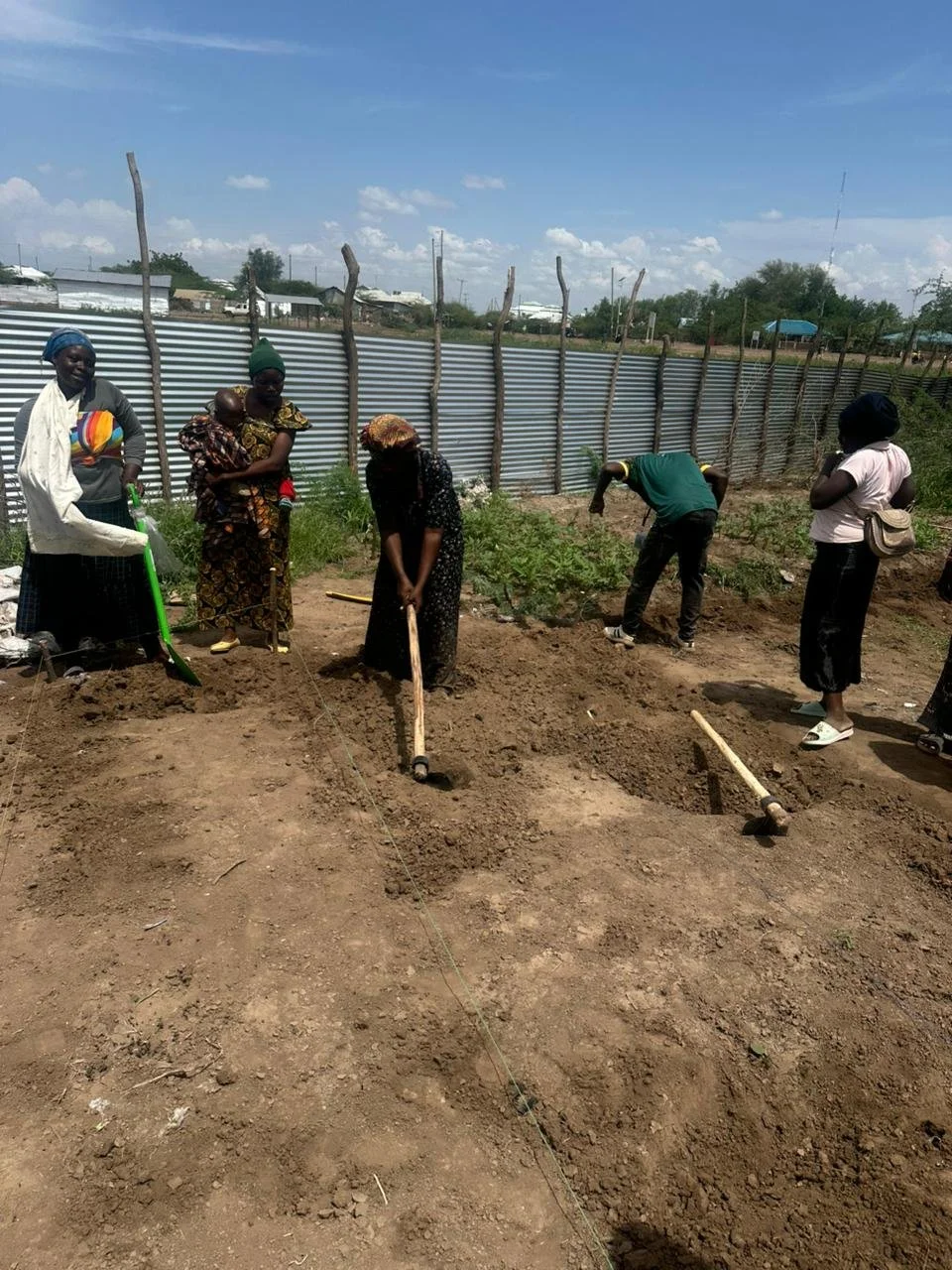
Mothers working on Land Preparation
At first glance, maternal health and agriculture may seem like two unrelated subjects.
In Kakuma, they are closely connected.
Food production affects food availability.
Food availability affects nutrition.
Nutrition affects health.
Household income affects access to food and other essential needs.
Climate conditions affect the ability to produce food.
This creates a chain of interconnected issues.
FHE's approach recognizes these connections.
Climate-smart farming seeks to improve agricultural resilience while making better use of available resources.
In Kakuma, this can involve approaches such as:
Kitchen gardening
Regenerative agriculture
Hydroponics
Mushroom farming
Water-efficient farming
Composting
Solar-powered irrigation
Locally appropriate agricultural technologies
These approaches can help families explore alternatives to conventional agriculture in a challenging environment.
The purpose is not to replace healthcare.
Instead, agriculture becomes one component of a broader family wellbeing system.
Health education helps families understand why nutrition matters.
Agriculture provides practical ways to produce food.
Livelihood training can help families explore economic opportunities.
Together, these activities strengthen the foundations of household resilience.
How Kitchen Gardens Strengthen Household Nutrition
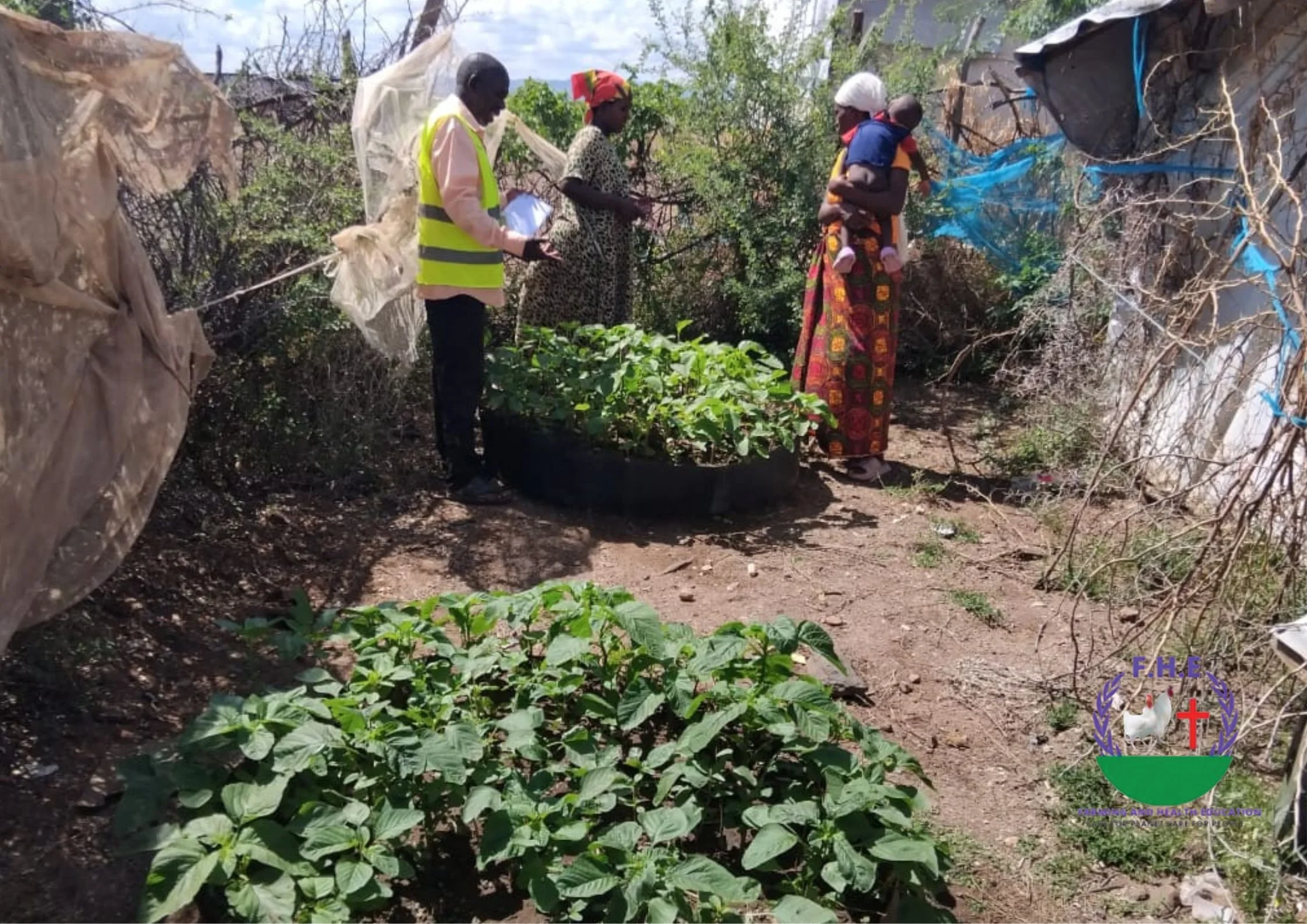
mentor visiting Mothers kitchen gardens
A kitchen garden may begin as a small agricultural project, but its potential benefits can extend across the household.
FHE's Nature+ Kitchen Garden Training Programme provides an example of this approach.
The programme trained mothers in areas including sustainable kitchen gardening, food security, nutrition, financial literacy, and social-emotional learning.
The programme combined theoretical learning with practical activities.
Participants learned by doing.
This is important because practical skills can remain useful long after a formal training session has ended.
A caregiver who learns how to establish a garden can potentially continue using those skills at home.
A household that produces vegetables may have greater access to fresh foods.
A family that understands food production and nutrition may be better positioned to make informed food choices.
A group of caregivers working together can also create a social support network.
FHE has also supported mothers and caregivers with micro-farming starter kits and training in sustainable farming, maternal health, and early childhood nutrition.
These activities show how a garden can become more than a place to grow vegetables.
It can become a learning space, nutrition resource, livelihood opportunity, and community connection point.
Building Livelihoods Through Small-Scale Climate-Smart Agriculture
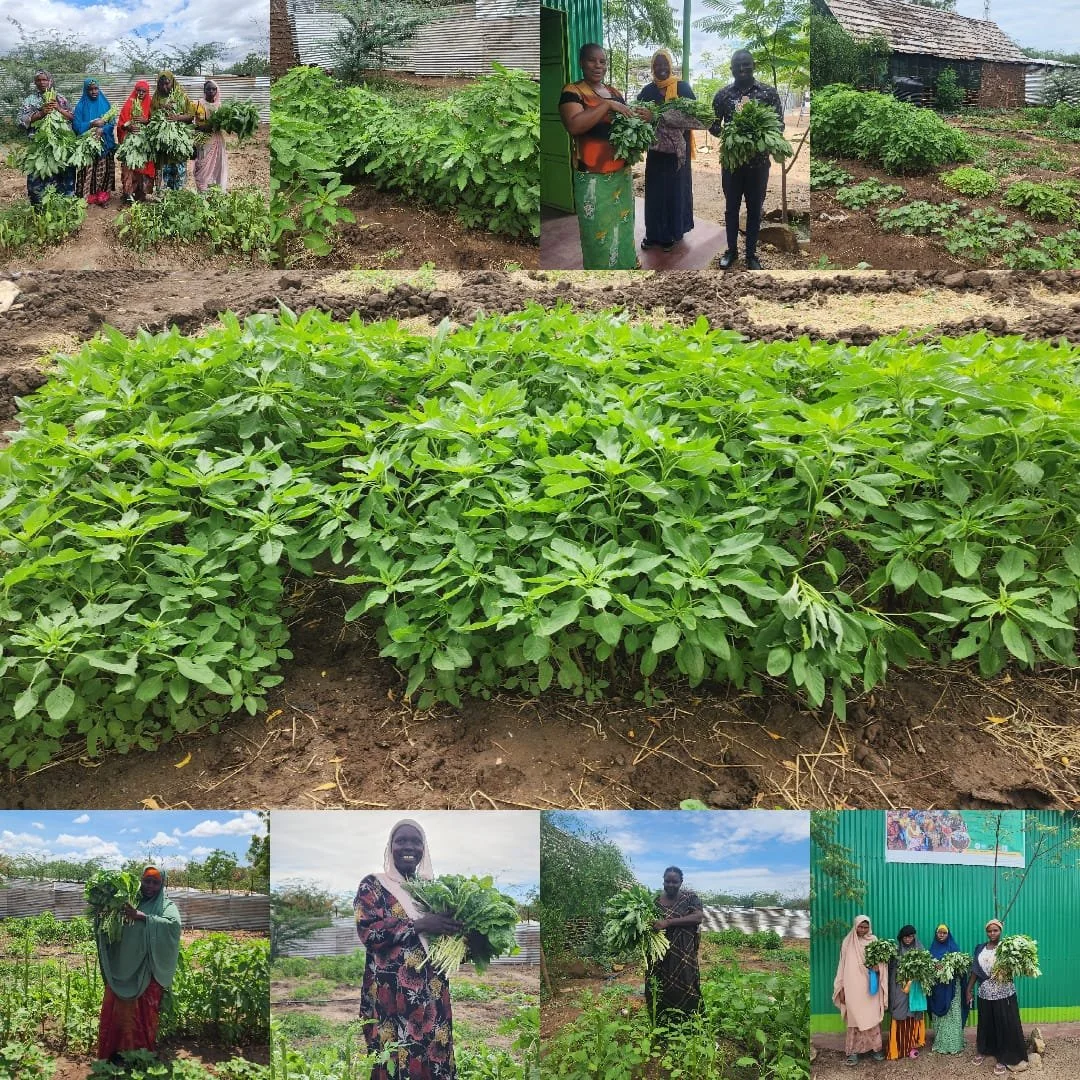
Mothers are harvesting at FHE hub
Food security and livelihood security are closely related.
Families need food, but they also need ways to meet other household expenses.
Small-scale agriculture can potentially contribute to both.
Kitchen gardens may primarily support household food production, while other agricultural models may create opportunities for income generation.
FHE's wider agricultural activities include hydroponics, mushroom farming, regenerative agriculture, and other climate-responsive approaches.
These models can provide different opportunities depending on land, water, skills, technology, and market access.
The emphasis is on developing practical skills.
Training can include:
Crop production
Soil improvement
Water management
Seedling care
Sustainable farming
Financial literacy
Entrepreneurship
Market awareness
Business planning
Livelihood development is especially valuable when it is combined with mentorship.
Participants need opportunities to continue learning after formal training ends.
They may also need access to markets, tools, finance, technical support, and networks.
This is why partnerships are important to the future of Nurture+ Kakuma.
Why an Integrated Approach Works Better
Families experience life as a whole.
They do not wake up in the morning thinking:
"Today I will face my nutrition problem."
"Tomorrow I will face my livelihood problem."
"Next week I will face my mental health problem."
These challenges often occur at the same time.
A mother who is worried about food may also be worried about income.
A father who is looking for work may also be caring for a young child.
A caregiver experiencing stress may also be managing household food production.
An integrated approach reflects this reality.
Instead of addressing one issue at a time, Nurture+ Kakuma connects several areas around the needs of parents and children.
The approach can be understood as a cycle:
Health education → better knowledge → practical action → stronger household resilience → improved family wellbeing.
This is why the connection between health and farming is so important.
The objective is not to create separate projects.
It is to build a connected system of support.
Community-Led Solutions: Putting Refugee Parents at the Centre
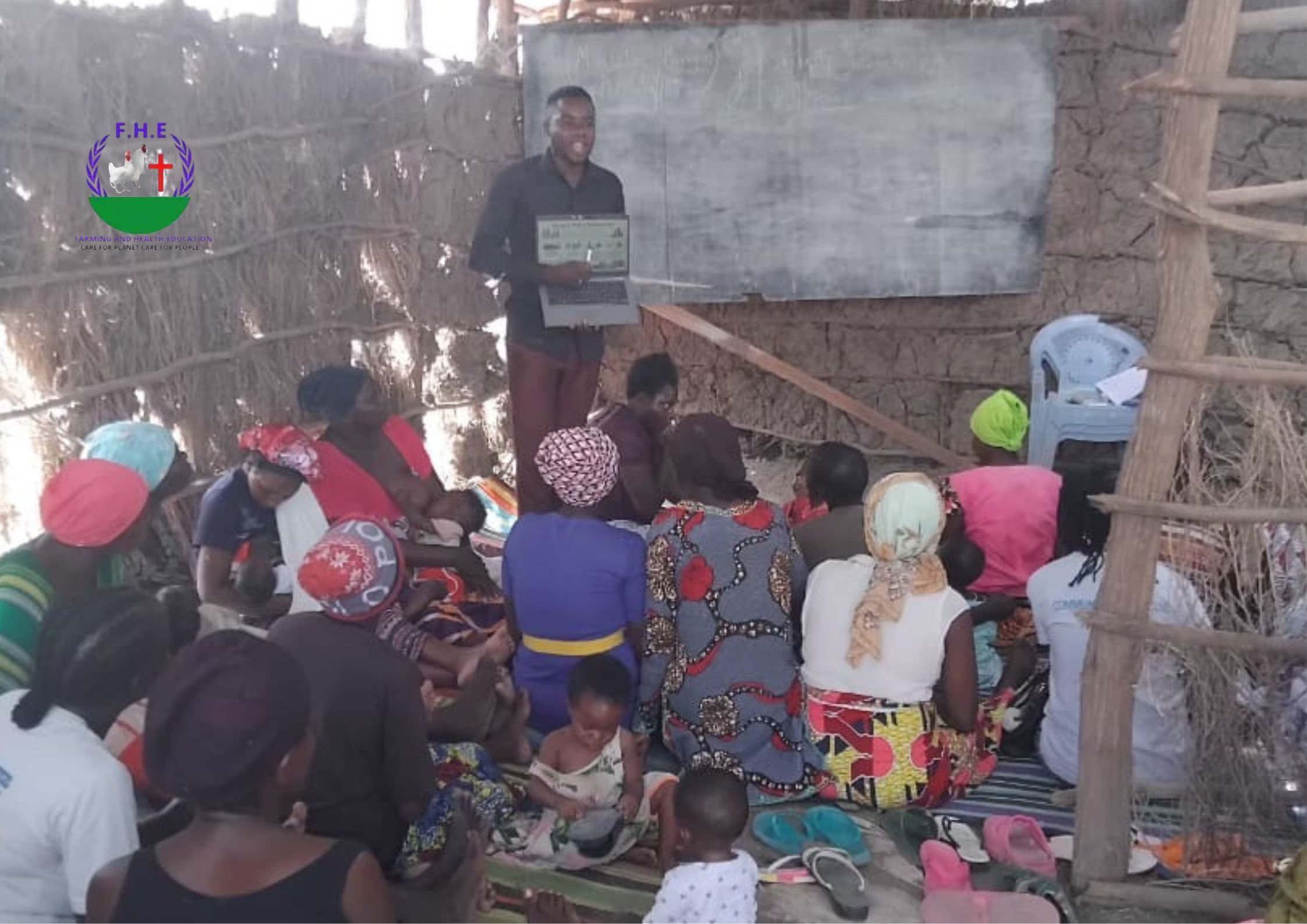
FHE Kalobeyei Hub
One of the strongest elements of FHE's approach is community leadership.
Farming & Health Education is a refugee-led organization working directly within the communities it serves.
This creates opportunities for programmes to be shaped by local experiences.
Refugee parents are not simply beneficiaries.
They are people with knowledge, skills, aspirations, and ideas.
They know the realities of their households.
They understand local food preferences.
They know the environmental challenges around them.
They understand the barriers that can prevent families from accessing opportunities.
Community-led programming can use this knowledge to create more relevant solutions.
Nurture+ Kakuma therefore places parents and caregivers at the centre.
The objective is to listen, train, support, learn, and build together.
This approach also strengthens ownership.
When communities participate in solutions, they are more likely to see those solutions as their own.
Skills, Knowledge, and Confidence: Empowering Parents to Thrive
Training is most valuable when it creates confidence.
Parents need knowledge, but they also need the ability to apply that knowledge.
This is why FHE emphasizes practical learning.
Participants can learn about health and nutrition while also developing agricultural skills.
They can learn about food security while establishing gardens.
They can learn financial literacy while thinking about livelihood opportunities.
They can learn about parenting while building supportive relationships with other caregivers.
The Nature+ programme demonstrates this principle.
Mothers participated in months of practical and theoretical training before completing the programme.
Graduation is important, but the larger achievement is the knowledge and confidence participants take home.
Skills can become assets.
A mother who knows how to establish a kitchen garden has gained a practical capability.
A caregiver who understands nutrition has gained knowledge that can influence household decisions.
A parent who knows where to seek support has gained an important resource.
Empowerment begins when people can say:
"I have the knowledge and skills to take action."
Supporting the Critical First Year of a Child’s Life
The first year provides an important foundation for future development.
During this period, babies need nurturing relationships, appropriate nutrition, healthcare, protection, and opportunities to interact with their caregivers and surroundings.
Parents are central to providing this environment.
This is why Nurture+ Kakuma focuses not only on children but also on the people caring for them.
A caregiver's health matters.
A caregiver's mental wellbeing matters.
A caregiver's knowledge matters.
A caregiver's access to nutritious food matters.
A caregiver's economic situation matters.
All of these factors can influence the environment in which a child grows.
Supporting the first year therefore means supporting the whole family.
Nurture+ Kakuma seeks to strengthen that foundation by connecting maternal support with nutrition, caregiving knowledge, mental wellbeing, and household resilience.
The Role of Fathers, Caregivers, and the Wider Community
Although mothers often carry significant caregiving responsibilities, child wellbeing is not the responsibility of mothers alone.
Fathers can play important roles in:
Supporting mothers
Participating in childcare
Supporting nutrition decisions
Helping with household responsibilities
Encouraging healthcare
Providing emotional support
Grandparents and other relatives can also contribute.
So can neighbours, community leaders, teachers, health workers, agricultural trainers, and local organizations.
This creates a wider community of care.
When responsibilities are shared, parents may have greater opportunities to rest, learn, work, and participate in community activities.
Children also benefit from having multiple supportive relationships around them.
Nurture+ Kakuma therefore has the potential to strengthen not only individual families but also the networks surrounding those families.
How Nurture+ Kakuma Creates More Resilient Families
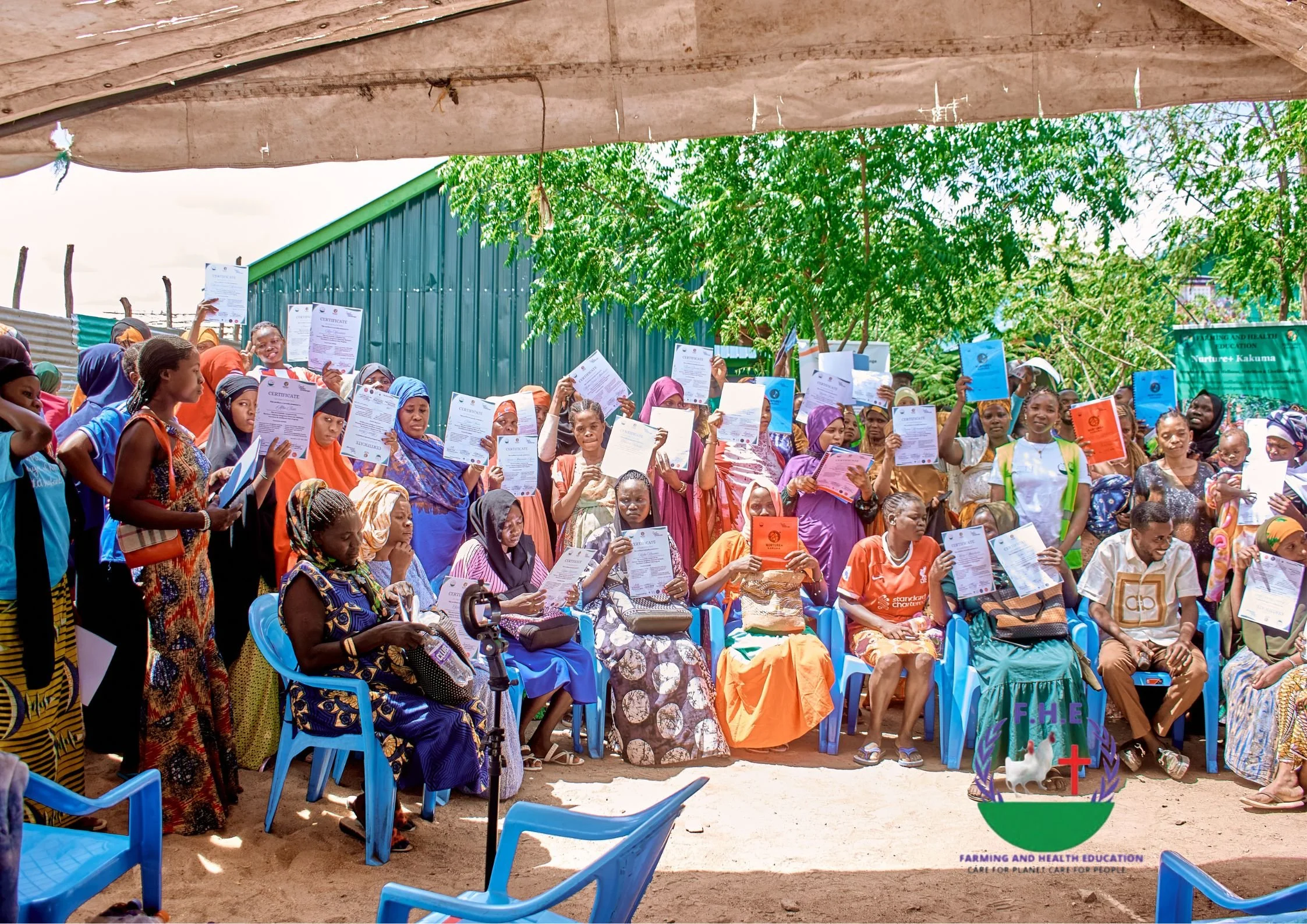
Family resilience is about the ability to adapt to challenges while maintaining wellbeing and creating opportunities for the future.
For refugee households, resilience can take many forms.
It can mean:
Growing food locally
Learning a new livelihood skill
Building financial knowledge
Developing stronger parenting skills
Accessing healthcare
Finding emotional support
Building community networks
Learning climate-smart agricultural practices
Each skill contributes to a larger foundation.
A family that has multiple resources and capabilities may be better positioned to respond when circumstances change.
This is the broader purpose of integrating health and farming.
The programme is not only responding to today's needs.
It is helping families develop capabilities that can continue creating value tomorrow.
From Better Nutrition to Greater Household Resilience
Better nutrition can be one of the visible outcomes of an integrated family support model.
But the benefits can go further.
When households learn to produce nutritious foods, they gain agricultural knowledge.
When they learn financial literacy, they gain economic knowledge.
When they participate in caregiver groups, they gain social connections.
When they receive health education, they gain information that can influence family decisions.
When these elements come together, household resilience can increase.
This creates a wider pathway:
Knowledge → Skills → Confidence → Action → Resilience.
The Nature+ Kitchen Garden Programme demonstrates this principle by combining food security, sustainable agriculture, financial literacy, and caregiver learning.
The objective is not simply to create gardens.
It is to create stronger households.
Measuring Impact: What Success Looks Like
Measuring impact is essential for understanding whether programmes are making a meaningful difference.
For Nurture+ Kakuma, success should not be measured only by how many people participate in training.
It should also consider what happens afterward.
Potential indicators include:
Number of parents receiving health and nutrition education
Number of caregivers participating in training
Number of households establishing kitchen gardens
Number of participants completing agricultural training
Knowledge gained by parents and caregivers
Caregiver confidence
Nutrition practices
Participation in climate-smart agriculture
Livelihood skills developed
Household food-production activities
Participation in mentorship
Strength of caregiver support networks
Referral and access to appropriate health services
Household resilience
FHE already has examples of measurable participation through its related programmes.
The Nature+ Kitchen Garden Training Programme, for example, graduated 42 mothers following months of practical and theoretical training.
As Nurture+ Kakuma develops, monitoring and evaluation can provide stronger evidence about longer-term outcomes.
This evidence can help the programme learn what works, identify gaps, improve implementation, and demonstrate impact to partners.
Stories and Experiences From the Community
Numbers tell part of the story.
Community experiences tell another part.
Across Kakuma, refugee communities have demonstrated that agriculture can be more than subsistence activity.
UNHCR has documented refugee farmers who have developed agricultural cooperatives and used farming to produce food for their families while generating income.
FHE's own work builds on this spirit of community initiative.
Through kitchen gardening and climate-smart agriculture, mothers and caregivers are learning practical skills that can be used within their households.
The graduation of mothers from Nature+ represents months of learning and practice.
The distribution of micro-farming starter kits represents another step toward practical action.
The establishment of agricultural demonstrations provides opportunities for community members to see new techniques in practice.
These experiences demonstrate a broader truth:
Refugee communities are not only communities in need of support. They are communities with ideas, skills, knowledge, and capacity to innovate.
Challenges, Lessons Learned, and Opportunities for Improvement
Integrated programmes are ambitious.
They require coordination across multiple areas.
There are also practical challenges.
Climate-smart agriculture requires access to water, tools, technical knowledge, and appropriate technologies.
Livelihood programmes require access to markets and sustainable business opportunities.
Health programmes require strong referral pathways and connections with professional healthcare services.
Caregiver programmes require trust, consistency, and community participation.
Funding is another important consideration.
Short-term funding can support activities, but long-term change often requires sustained investment.
This creates several opportunities for improvement.
First, programmes can strengthen follow-up and mentorship.
Second, agricultural activities can be linked more strongly to markets where appropriate.
Third, health education can remain closely connected to professional health services.
Fourth, impact measurement can be strengthened.
Fifth, community feedback can continuously inform programme design.
These lessons can help Nurture+ Kakuma become more effective and sustainable over time.
How Partners Can Support and Scale Nurture+ Kakuma
No organization can address maternal health, nutrition, climate resilience, and livelihoods alone.
Partnerships can help expand the impact of community-led solutions.
Different partners can contribute different resources.
Health organizations
Health partners can support maternal and child health education, referrals, professional expertise, and community health activities.
Nutrition organizations
Nutrition partners can support evidence-based nutrition education, food security initiatives, and caregiver training.
Agricultural organizations
Agricultural partners can provide seeds, tools, technologies, training, water-efficient systems, and technical mentorship.
Livelihood organizations
Livelihood partners can support entrepreneurship, financial literacy, market access, business development, and financial inclusion.
Research institutions
Researchers can help document outcomes, evaluate interventions, and generate evidence that can inform future programmes.
Funders
Funders can provide the flexible and long-term resources needed to strengthen community-led programmes.
Scaling Nurture+ Kakuma should not simply mean reaching more people.
It should mean building a stronger model that remains locally owned and responsive to community needs.
The Future of Integrated Maternal Health and Climate-Smart Livelihoods
The future of family support in displacement settings will increasingly require integrated solutions.
Maternal health cannot be separated from nutrition.
Nutrition cannot be separated from food security.
Food security cannot be separated from livelihoods.
Livelihoods cannot be separated from climate resilience.
And none of these can be completely separated from mental wellbeing.
Kakuma provides an important environment for testing and developing these connections.
FHE's work demonstrates how refugee-led organizations can combine different areas of expertise to create community-based solutions.
The future could include stronger connections between:
Maternal health + Nutrition + Mental wellbeing + Agriculture + Livelihoods + Climate resilience + Early childhood development.
This model has potential beyond Kakuma.
If evidence demonstrates positive outcomes, lessons from the programme could potentially inform similar approaches in other refugee and displacement-affected communities.
The ultimate goal is not simply to create a successful project.
It is to demonstrate that integrated, community-led solutions can help families build healthier and more resilient futures.
Frequently Asked Questions About Nurture+ Kakuma
What is Nurture+ Kakuma?
Nurture+ Kakuma is an integrated maternal and family wellbeing programme by Farming & Health Education that connects pregnancy-to-postnatal health support, mental wellbeing, nutrition, and small-scale climate-smart farming to support refugee parents and young children.
Who does Nurture+ Kakuma support?
The programme focuses primarily on refugee parents, mothers, caregivers, and families with young children in Kakuma and surrounding communities.
Why does Nurture+ Kakuma combine health education with farming?
Health and livelihoods are interconnected. Farming can help families explore ways to improve food availability and develop practical skills, while health and nutrition education helps families understand how nutritious food contributes to wellbeing.
How does Nurture+ Kakuma support mothers during pregnancy?
The programme takes a pregnancy-to-postnatal approach that connects maternal health education, nutrition, emotional wellbeing, community support, and practical household resilience.
Does support continue after childbirth?
Yes. Nurture+ Kakuma recognizes that maternal and family support must continue beyond pregnancy. The approach includes nutrition, caregiving, mental wellbeing, child development, and household resilience during the child's first year.
Why is nutrition important during pregnancy and early childhood?
Pregnancy and early childhood are periods when adequate nutrition is particularly important. Appropriate nutrition supports maternal wellbeing and healthy child growth and development.
What is climate-smart agriculture?
Climate-smart agriculture refers to farming approaches designed to improve resilience to climate challenges while making effective use of available resources. Examples relevant to Kakuma can include kitchen gardens, regenerative agriculture, hydroponics, water-efficient farming, and other locally appropriate approaches.
How do kitchen gardens help refugee families?
Kitchen gardens can provide opportunities to produce fresh foods locally while giving caregivers practical agricultural skills. They can contribute to household food security and provide opportunities for learning and, where appropriate, livelihood development.
Does Nurture+ Kakuma provide farming training?
FHE's related programmes include practical training in sustainable and climate-smart agriculture, including kitchen gardening and other agricultural approaches. The Nature+ Kitchen Garden Training Programme combined practical and theoretical learning for mothers.
What role does mental wellbeing play in Nurture+ Kakuma?
Mental and emotional wellbeing is an important part of caregiver wellbeing. Parents need opportunities to build confidence, connect with others, and access appropriate support when they experience emotional or psychological challenges.
Does Nurture+ Kakuma support fathers?
The wider approach recognizes that fathers, grandparents, relatives, and other caregivers can play important roles in supporting mothers and children. Family wellbeing is a shared responsibility.
Is Nurture+ Kakuma community-led?
Yes. Farming & Health Education is a refugee-led and community-based organization. Community participation, practical learning, and locally relevant solutions are central to its approach.
What makes Nurture+ Kakuma different from a traditional health programme?
Nurture+ Kakuma connects health with other factors that influence family wellbeing, including nutrition, mental health, climate-smart agriculture, food security, livelihoods, and community support.
What is the Good Start Challenge?
The Good Start Challenge is an initiative focused on identifying and supporting innovative solutions that improve the wellbeing of parents and caregivers of young children in disadvantaged settings. Nurture+ Kakuma was selected as one of its finalists.
How can Nurture+ Kakuma contribute to food security?
The programme connects nutrition education with practical food-production approaches such as kitchen gardening and climate-smart agriculture. These approaches can help households explore ways to increase access to nutritious foods.
Can climate-smart farming create livelihoods?
Small-scale climate-smart agriculture can potentially contribute to livelihoods through food production, value addition, and market opportunities. However, successful livelihood development also depends on factors such as skills, resources, market access, financing, and ongoing support.
What does success look like for Nurture+ Kakuma?
Success can include stronger caregiver knowledge, improved nutrition practices, increased participation in climate-smart farming, stronger household food security, improved livelihood skills, greater caregiver confidence, and more resilient families.
Why is the first year of a child's life important?
The first year is a period of rapid development. Young children need nurturing relationships, appropriate nutrition, healthcare, protection, and opportunities for interaction and learning. Supporting caregivers is therefore an important part of supporting children.
How can organizations support Nurture+ Kakuma?
Organizations can support the programme through funding, technical expertise, agricultural resources, health and nutrition partnerships, research, mentorship, market connections, technology, and other forms of collaboration.
Can Nurture+ Kakuma be replicated elsewhere?
The principles behind the programme—integrating health, nutrition, caregiver wellbeing, climate-smart agriculture, and livelihoods—may provide useful lessons for other displacement-affected communities. Replication should, however, be adapted to each community's needs, resources, culture, and environmental conditions.
What is the vision of Nurture+ Kakuma?
The vision is captured in the programme's guiding message:
Thriving Mothers, Thriving Futures.
The aim is to help create conditions in which mothers, children, families, and communities can build healthier, more resilient, and more sustainable futures.
Conclusion: Thriving Mothers, Thriving Futures
The journey from pregnancy to a child's first year is one of the most important journeys a family can make.
For refugee parents in Kakuma, that journey can involve challenges related to health, nutrition, livelihoods, climate, food security, and emotional wellbeing.
But these challenges also reveal an opportunity.
Instead of addressing each challenge separately, communities can build solutions that connect them.
This is the opportunity represented by Nurture+ Kakuma.
Through Farming & Health Education, maternal and child wellbeing can be connected with practical food-production skills, climate-smart agriculture, nutrition education, mental wellbeing, and livelihood development.
A kitchen garden can become more than a source of vegetables.
It can become a learning space.
A farming skill can become more than an agricultural technique.
It can become a livelihood opportunity.
A caregiver group can become more than a training session.
It can become a support network.
And health education can become more than information.
It can become confidence and action.
Most importantly, refugee parents can become more than recipients of support.
They can become participants, innovators, caregivers, farmers, entrepreneurs, community leaders, and partners in creating change.
The future of maternal and child wellbeing in Kakuma depends on recognizing these strengths and building systems around them.
Nurture+ Kakuma represents one pathway toward that future.
When mothers thrive, children gain stronger foundations.
When families become more resilient, communities become stronger.
And when communities lead their own solutions, better futures become possible.